
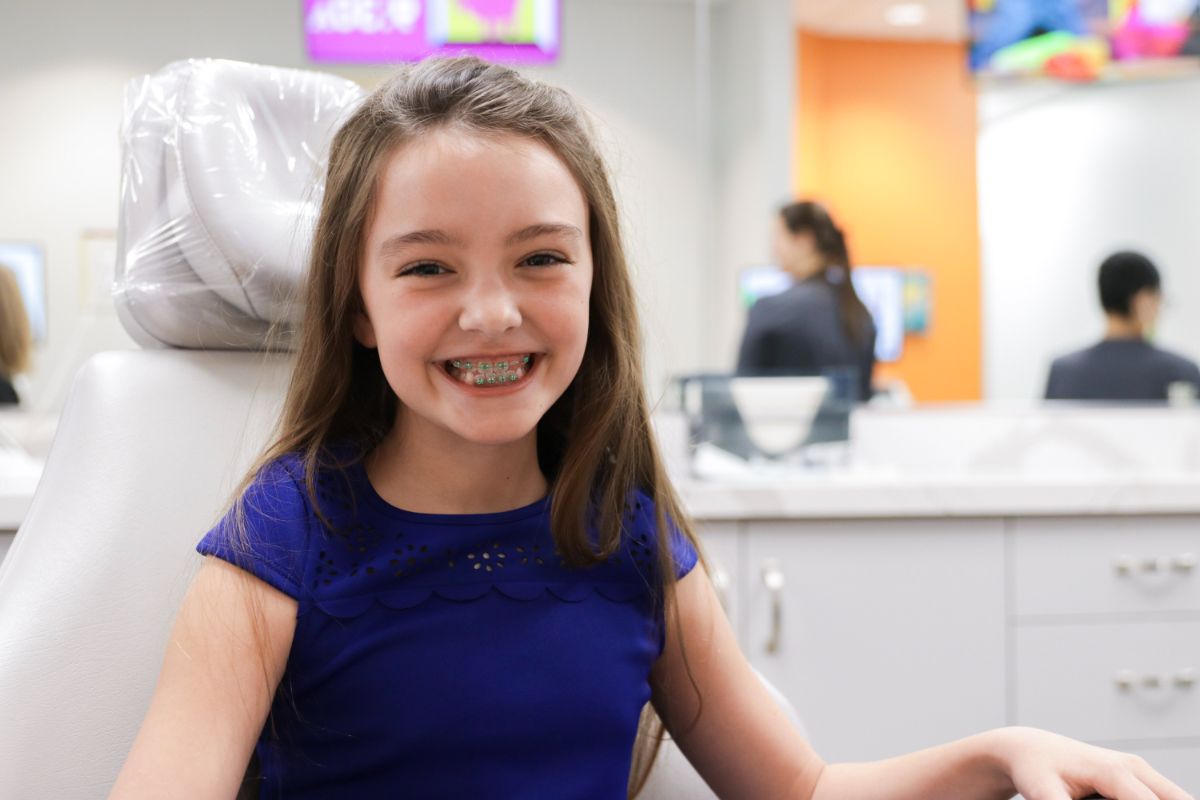
A misaligned jaw in children occurs when the upper and lower jaws don’t fit together properly, creating bite problems that affect how your child chews, speaks, and smiles. This condition, called malocclusion, can involve the teeth, the jaw bones, or both. Recognizing your child’s misaligned jaw early gives Dr. Shawn or Dr. Candice at About Faces and Braces in Clarksville the best opportunity to guide healthy development and prevent more complex issues as your child grows.
Jaw misalignment often becomes noticeable when permanent teeth start coming in, usually between ages 6 and 12. Some children inherit jaw size differences from their parents. Others develop alignment issues from habits like prolonged thumb sucking or pacifier use. According to the American Association of Orthodontists, malocclusion is one of the most common dental conditions affecting children. The good news? When caught early, most jaw alignment issues respond well to treatment.
There’s an important difference between skeletal and dental misalignment. Skeletal issues involve the actual jaw bones growing at different rates or in different directions. Dental misalignment means the teeth themselves aren’t positioned correctly, even if the jaws are fine. Many children have a combination of both. Our orthodontists, Dr. Shawn and Dr. Candice, can tell the difference and recommend the right approach for your child.
What Are the Signs and Types of Jaw Misalignment in Children?
Jaw misalignment in children shows up in several common forms, including crowded teeth, gaps, open bites, deep overbites, underbites, and overjet. Each type affects function, appearance, or both. Watching for early signs at home helps you decide when to schedule an evaluation. Here are the most common types and what to watch for:
What Causes Crowded Teeth?
When there isn’t enough room in the jaw for all the teeth, they overlap, twist, or push against each other. Crowding makes brushing and flossing difficult, which increases cavity and gum disease risk.
What Do Gapped Teeth Mean?
Gapped teeth are the opposite issue. Too much space between teeth can signal that the jaw is larger than needed for the tooth size, or that teeth are missing. Gaps affect how teeth work together when chewing.
What Is an Open Bite?
Your child’s back teeth touch when biting down, but the front teeth don’t meet at all. Open bites make biting into foods like apples or sandwiches frustrating. They can also affect speech clarity. Prolonged thumb sucking past age 4 is a leading cause of open bite in children.
What Is a Deep Overbite?
The upper front teeth cover too much of the lower front teeth when biting down. In severe cases, the lower teeth may bite into the roof of the mouth, causing discomfort and tissue damage.
How Do You Spot an Underbite?
The lower jaw sits forward of the upper jaw, so the bottom teeth are in front of the top teeth. Underbites affect facial appearance and can make chewing less efficient.
Why Does Overjet Matter?
Sometimes confused with overbite, overjet describes upper teeth that stick out horizontally beyond the lower teeth. Children with significant overjet face higher risk of dental trauma during sports or falls.
Signs to watch for at home:
- Difficulty biting or chewing food
- Mouth breathing, especially during sleep
- Speech difficulties or lisping
- Teeth that don’t line up when your child smiles
- Jaw clicking or popping sounds
- Complaints of jaw soreness or headaches
Benefits of Recognizing and Treating Your Child’s Misaligned Jaw Early
Early orthodontic treatment uses your child’s natural growth to correct bite issues before they become harder to fix. Recognizing and treating your child’s misaligned jaw during childhood often leads to shorter total treatment time, better function, healthier long-term tooth wear, and stronger results that hold up well into the teen years. Phase 1 care can also reduce the complexity of any future Phase 2 treatment. Here’s why timing matters:
How Does Early Treatment Guide Natural Growth?
Children’s jaws are still developing. Orthodontic treatment can direct that growth in the right direction, creating space for permanent teeth and improving how the jaws fit together. Learn more about treatment timing on our orthodontics for all ages page.
Can Early Treatment Avoid More Invasive Options?
Correcting skeletal jaw issues in adults often requires more involved procedures. Treating the same issues in a growing child may only need braces or growth appliances.
How Does Treatment Improve Daily Function?
Proper jaw alignment makes eating easier and more comfortable. It can also improve breathing patterns and speech clarity.
Does Early Treatment Protect Teeth Long-Term?
Misaligned bites cause uneven wear on tooth surfaces. Teeth that stick out are more likely to chip or break during accidents. Fixing alignment issues protects your child’s smile for years to come.
Can Early Treatment Build Confidence?
Kids notice their smiles. Feeling good about how their teeth look can boost self-esteem during important social and academic years.
Can Early Treatment Shorten Total Time?
Phase 1 treatment during childhood can simplify or reduce the need for Phase 2 treatment as a teen.
Treatment Options for a Misaligned Jaw: Braces, Aligners, and Appliances
Treatment options for a misaligned jaw include metal braces, clear braces, clear aligners, palatal expanders, and growth appliances. The right choice depends on your child’s age, the severity of the issue, and whether the problem is skeletal, dental, or both. At About Faces and Braces, our orthodontists Dr. Shawn and Dr. Candice will recommend the approach that fits your child’s specific situation. Here’s how the main options compare:
| Treatment Type | Best Age Range | Handles Complex Issues | Visibility | Removable |
|---|---|---|---|---|
| Metal braces | 7+ | Yes | Visible | No |
| Clear braces | 10+ (teens preferred) | Yes | Less visible | No |
| Clear aligners | 12+ (cooperative patients) | Mild to moderate | Nearly invisible | Yes |
| Palatal expanders | 6-12 | Skeletal width issues | Hidden inside mouth | No |
| Growth appliances | 7-12 | Skeletal jaw position | Varies | Some types |
For complex jaw alignment cases, metal braces remain the most versatile choice. They work for all ages and can handle significant crowding, spacing, and bite issues.
A subtler option, clear braces use tooth-colored brackets that blend with your child’s smile. They work the same way as metal braces but appeal to older children and teens who want a less noticeable look.
Clear aligners offer a removable choice for children who will wear them consistently. They’re a good fit for mild to moderate alignment issues but require cooperation.
For a narrow upper jaw, palatal expanders create room for crowded teeth and improve how the upper and lower jaws fit together. These work best before the jaw bones fully harden, which is why timing in early childhood matters so much.
To guide jaw development in specific directions, growth appliances can encourage the lower jaw to grow forward or help correct an underbite.
Some children benefit from combination treatment. For example, a palatal expander might come first, followed by braces to fine-tune tooth positions. Many parents are surprised at how much can be accomplished by combining two simple appliances at the right ages. A free consult with Dr. Shawn or Dr. Candice will clarify which path fits best.
Factors That Influence Treatment Cost
Orthodontic treatment cost depends on case severity, treatment length, appliance type, and whether two-phase treatment is needed. Most families also have insurance benefits and flexible payment options that help spread the investment over time. Typical orthodontic care for children falls within a defined range, though every child’s plan looks different. Here’s what affects your investment:
Severity of the alignment issue. More complex cases require longer treatment and sometimes multiple appliances, which increases the overall cost.
It also helps to understand that timing plays a role. Treatment length matters because a case that takes 18 months will cost differently than one requiring 30 months of care.
When it comes to appliance choice, appliance type influences price too. Clear aligners and clear braces typically cost more than metal braces, and specialized growth appliances add to the total.
For some kids, two appointments aren’t enough. Two-phase treatment addresses issues at the ideal times but involves two separate treatment periods, with Phase 1 during childhood and Phase 2 as a teen.
Insurance coverage. Many dental insurance plans include orthodontic benefits for children. About Faces and Braces accepts most insurance and can help you understand your coverage. You can also review our insurance and financing information before your visit.
Families across Middle Tennessee often ask about how to budget for care. Payment options like OrthoBanc online payments make it easier to fit treatment into your family’s budget, and flexible payment plans spread the cost over time.
A free consult helps you understand exactly what your child needs and what to expect financially. No surprises, no pressure. Our Clarksville team will lay out clear numbers so you can plan with confidence.
Is Your Child a Candidate for Treatment?
According to the American Association of Orthodontists, children should have their first orthodontic evaluation by age 7. This doesn’t mean treatment starts that early for everyone. It means an orthodontist can spot developing issues and monitor growth.
Your child may be a candidate for treatment if you notice:
- Difficulty chewing or biting food properly
- Mouth breathing during the day or while sleeping
- Speech issues that don’t improve with age
- Thumb sucking or finger habits past age 5
- Visible jaw asymmetry when looking at your child’s face
- A crossbite (upper teeth sitting inside lower teeth on one or both sides)
- Early or late loss of baby teeth
- Teeth that don’t come together when biting
Family history matters too. If you or your partner had significant orthodontic treatment, your child faces higher odds of needing care.
Not sure if it’s time? About Faces and Braces offers a virtual exam option for initial screening, which is popular with busy families. You can get professional input from home before scheduling an in-person visit at our Clarksville location. Our orthodontists Dr. Shawn and Dr. Candice can identify concerns that might not be obvious to parents, and they’ll explain what they see in plain, parent-friendly language. Many parents find that an early evaluation gives them peace of mind, even when no treatment is needed yet. Our team will recommend monitoring visits at the right intervals so you never miss the ideal treatment window. Whether your child needs care now or simply benefits from routine check-ins as their adult teeth come in, you’ll always know where things stand and what comes next.
Frequently Asked Questions
At what age should jaw misalignment be treated?
The best age really depends on the specific issue. Some issues, like crossbites and severe crowding, benefit from treatment as early as age 7. Others are better addressed once most permanent teeth have come in, around age 11-13. An evaluation by age 7 lets Dr. Shawn or Dr. Candice determine the ideal timing for your child.
Can a misaligned jaw correct itself as my child grows?
In most cases, no. While some minor spacing issues may improve as more teeth come in, true jaw misalignment typically doesn’t self-correct on its own. Waiting often makes issues harder to fix. Early monitoring helps catch the right window for treatment.
How long does jaw alignment treatment take?
Active treatment typically ranges from 12 to 24 months. Every mouth is different, and every child responds differently to treatment, so complex cases may take longer. Two-phase treatment involves separate periods during childhood and teen years.
Will my child need jaw correction beyond braces?
Most children treated early won’t. Orthodontic treatment during growth years can often correct jaw position issues that would require more involved intervention in adults. That’s one of the biggest benefits of early evaluation and treatment with Dr. Shawn or Dr. Candice in Clarksville.
Does insurance cover orthodontic treatment for children?
Many dental insurance plans include orthodontic coverage for children, often with a lifetime maximum benefit. Coverage varies by plan, so it’s worth a quick call to verify. Our team at About Faces and Braces can review your benefits and explain what to expect before treatment begins.
What happens at the free consult?
Your child will get a thorough evaluation using digital scans, which are faster and more comfortable than traditional impressions. Dr. Shawn or Dr. Candice will explain what they find, discuss treatment options, and answer all your questions. You’ll leave with a clear picture of your child’s needs and an individualized and unique treatment plan designed just for them. Families come to our Clarksville office from across Middle Tennessee for this kind of personalized first visit, and we’re glad to welcome yours too.
Ready to get answers about your child’s bite, jaw growth, or orthodontic timing? Schedule a free consult with About Faces and Braces or start with a virtual exam from home.